
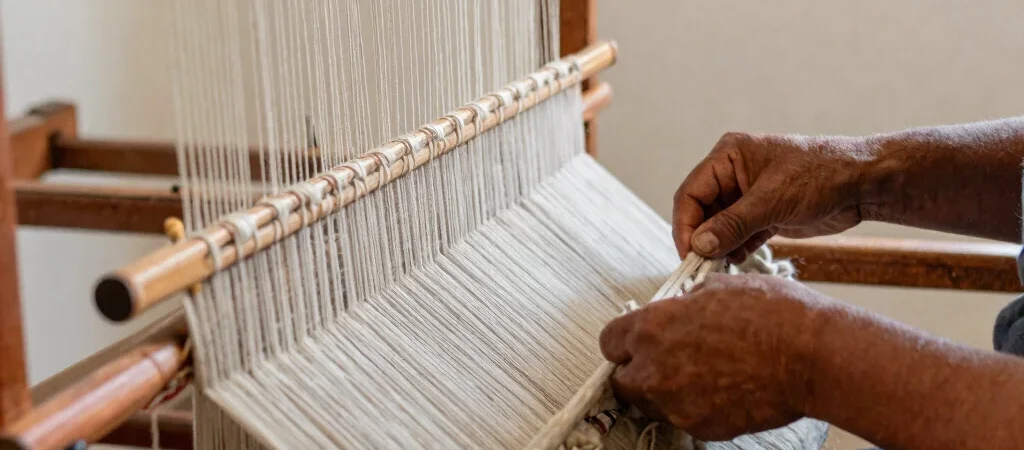
The first thing a viewer notices in a woven textile may be its color or geometry. For Diné weaving, that visible pattern is only one part of the work: there is also the maker’s skill, the material and the particular decisions made at the loom. Looking closely is useful; assuming every design carries the same meaning is not.
A practice made by people
Diné weaving is a living craft practiced by individual makers, not a single fixed style. Weavers make choices about materials, color and design, and those choices can reflect personal preference, practical constraints or the intended use of a piece. No one pattern can stand in for every weaver or community.
Wool and the loom are part of the process, but a finished textile also carries time and learned technique. Knowledge may be shared through family or community, and people bring their own paths to the work. Treating a piece as decoration alone misses the labor and expertise that make it.
Context changes what we see
Diné homeland includes the Four Corners region of the United States, though a textile’s maker and history should never be inferred from appearance alone. Markets have also influenced how weaving is made, described and sold over time. A careful account distinguishes documented history from assumptions about what a design must symbolize.
If you are writing about or viewing a particular piece, seek information from the maker or a reliable source connected to the work. Ask who made it, what materials were used and how the maker describes its purpose. When that information is unavailable, say so rather than filling the gap with a sweeping interpretation.
Let the maker lead
Respectful attention does not require turning every textile into a puzzle to decode. Notice the construction and design, while leaving room for the weaver’s own account and for meanings that may be personal or specific. The best starting point is simple: look carefully, and do not claim more than you know.