
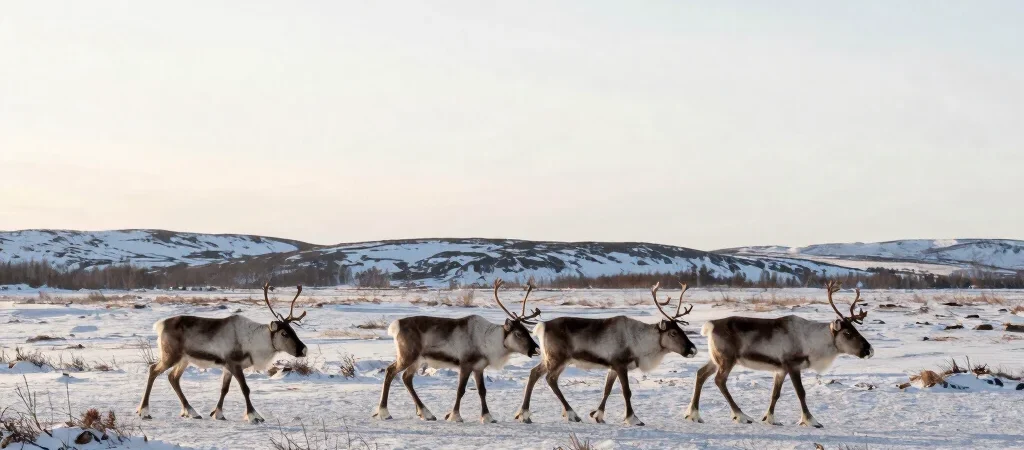
A reindeer herd moving across a snowy landscape can look, from a distance, like a timeless scene. But Sámi reindeer herding is a living livelihood shaped by changing seasons, working knowledge and decisions about land. It matters to understand both the animals and the places they depend on.
One people, many lives
Sápmi, the Sámi homeland, stretches across parts of Norway, Sweden, Finland and Russia. Sámi communities are diverse, and reindeer herding is central to some families and livelihoods—not a universal experience or a measure of anyone’s identity. Language, work and cultural practice also vary across communities and borders.
Herding depends on close attention to animals, weather and seasonal pasture. That knowledge is practical and continually applied: where herds can move, what conditions they encounter and how routes change all matter. A photograph of reindeer alone cannot show the decisions behind it.
Land shapes the story
Roads, development and other competing land uses can affect the areas available to herds. Climate change adds uncertainty by altering winter conditions and access to food. The pressures are not identical across Sápmi, and laws and land-use decisions differ between countries.
That context helps keep the story from becoming a simple tale of tradition versus modernity. Sámi people work, study and organize in contemporary societies while also carrying forward cultural knowledge in different ways. The question is not whether a community has changed, but who gets to shape change on its land.
Read beyond the image
When you encounter a story about Sámi herding, look for the location, the community’s own perspective and the specific land-use issue involved. Ask what is known, what remains uncertain and whose account is being presented. Those details turn a distant landscape into a place where people are making decisions now.